
Titanfall 2 (Respawn Entertainment, 2016) Review
A symphony of speed and shooting in a futuristic setting.
In 2003, Infinity Ward released a new game called Call of Duty, a first-person shooter that drew inspiration from the well-established Medal of Honor series. Not surprisingly, 21 people on the original Call of Duty production team previously worked together on 2002’s Medal of Honor: Allied Assault before leaving to found their own company, which became Infinity Ward. 1
As is widely known, Call of Duty achieved remarkable success, surpassing Medal of Honor, and carved out its own name in the gaming industry, becoming the most famous and successful FPS of this millennium. Even though subsequent releases have evolved the formula since the first installment, the original essence remains distinctly recognizable to this day. Many clones of the series have emerged over time, but very few have managed to replicate the franchise’s success in the mainstream. In March 2014, however, another FPS intellectual property titled Titanfall made its debut. It was the opus primus of a game studio called Respawn Entertainment, founded by Jason West and Vince Zampella, who were the original co-founders of Infinity Ward.
If we were to make a hasty assumption about the Titanfall franchise based on the previous statements, we would probably predict that it is heavily influenced by Call of Duty (it is) and that it will eventually surpass its source of inspiration in terms of popularity (though that remains uncertain for now). Nevertheless, Respawn Entertainment wanted to give a new twist to a stagnant and generic FPS genre whose games at the time were uninspired variations of the same Call of Duty formula, resulting in a slew of forgettable and bland titles such as Homefront, Bodycount, Brink, Syndicate, Bulletstorm, Aliens: Colonial Marines, etc.
Titanfall introduced captivating mechanics that focused primarily on player movement, including features like wall-running and double-jumping. These innovations contributed to a fast-paced and dynamic gameplay that, along with the inclusion of titans, formed a compelling evolution of the core concept without feeling overtly derivative. It’s no wonder that Activision responded with their poor copy called Call of Duty: Advanced Warfare, based on Titanfall principles (though the campaign was respectable).
Titanfall 2 builds upon these very concepts and refines them to elevate the fluid movement, frenetic gunplay, and parkour mechanics, which are reminiscent of Mirror’s Edge. These elements are juxtaposed with the slower movement, yet immersive and varied gameplay of a titan. Additionally, the title introduces a layer of depth by expanding its content, offering players an extensive arsenal of weaponry. This rich variety prevents the overall experience from becoming monotonous, encouraging players to experiment and adapt to various playstyles based on the weapons they wield.
The titan loadouts also reflect this philosophy, since each one has a common set of elements, such as the primary weapon, an ordnance ability, a tactical ability, a defensive ability, and a core ability. Each one presents different paradigms depending on the primary weapon, because we’re not going to play the same way with a machine gun as we are with a rocket launcher. The eight available loadouts, which are unlocked as the player progresses through the story, are varied enough to keep us from getting stuck on one, as each one is suitable for different contexts.
The way the infantry and titan are intertwined adds more diversity to the combat, even though the way the titan is played is rather the opposite to the game’s premise. I like how both gameplay mechanics are executed because they work well together, but it also makes me wonder if the game would have benefited more from a faster vehicle that didn’t create friction with the core concept of fast-paced gunplay. It’s an interesting debate because, on the one hand, the constant frenetic pace could possibly burn out the player quickly by offering a repetitive experience. On the other hand, if done right, it could introduce new mechanics under the umbrella of providing a fast gameplay experience, such as flying vehicles that would add to the sense of speed.
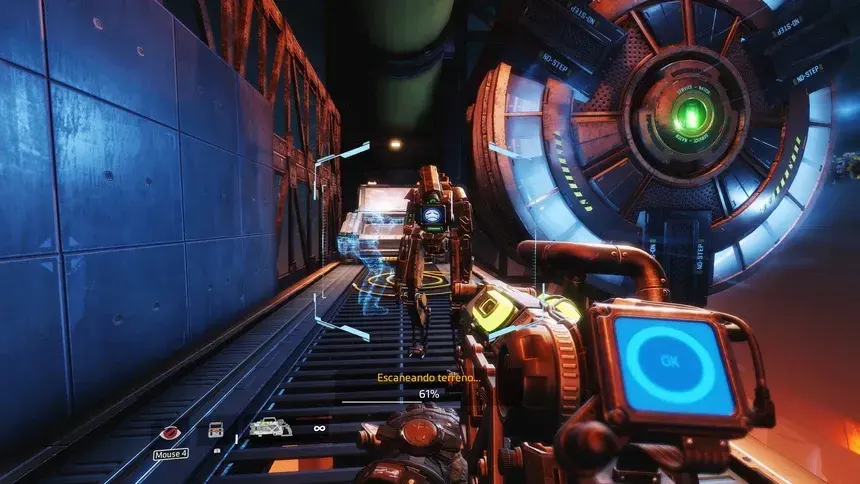
Ammo is not an issue because there are plenty of weapons scattered throughout the open levels so the player is not limited by a number. This also applies to the titans, as the only restriction we have in this regard is the capacity of the weapon magazines. We don’t have to worry about looting more ammo for them. A similar approach is taken with health, because as soldiers, we don’t have a health bar that indicates our status, similar to Call of Duty. It regenerates automatically, which is different from how the titan health system works. To prevent it from being destroyed, we’ll have to take battery cells, which are spread around the map and dropped by defeated titan enemies.
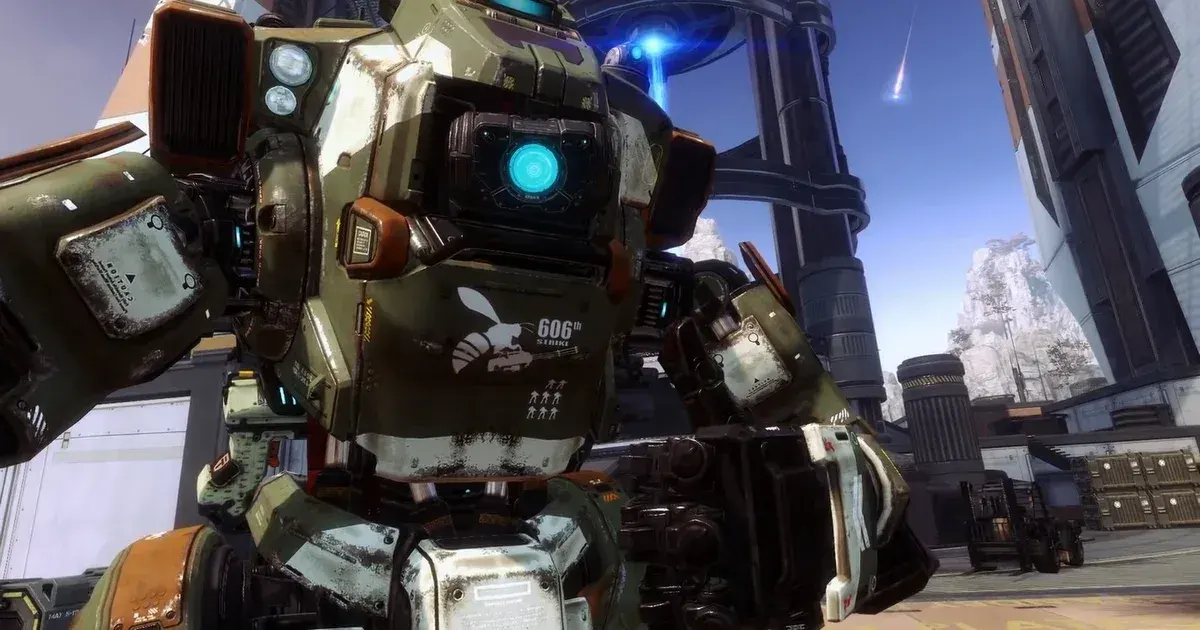
As is often the case in many FPS games, the story is an excuse to set the game in a belligerent context to justify killing people and destroying titans. Unfortunately, the plot is as uninspired and unremarkable as the script or the voice acting of the Spanish version (I can’t speak for the English one). Even the generic name of the protagonist, Jack Cooper, can give you a vague idea of how the rest of the plot is like. The only aspect that manages to shine a bit brighter in this regard is Jack’s relationship with the titan BT-7274 (or simply BT for the friends). However, don’t expect a narrative akin to Ghost in the Shell that delves into questions about the intrinsic traits of human beings and our relationship with artificial intelligence-driven systems like robots. The way humans and machines interact in Titanfall 2 leans more towards the “Yoo BT that shot was fye 🔥” end of the spectrum. At least it doesn’t try to reach beyond its grasp, avoiding the pitfalls of a pretentious, half-baked narrative riddled with ludonarrative dissonance, a flaw best illustrated by titles like Spec Ops: The Line or The Last of Us Part II.
The game’s narrative matches the fast-paced nature of its gameplay. It doesn’t overstay its welcome and introduces enough interesting mechanics, such as time travel, cranes, and the arc tool, to avoid repetition and keep the player engaged throughout the game. Coupled with the enjoyable gameplay, these factors collectively deliver an engaging experience that makes me often overlook the presence of the weak storyline. However, it’s undeniable that it wouldn’t have hurt to create a more interesting narrative with fleshed out characters and a leaner cast, as the overwhelming appearance of the characters in the plot and their rather ephemeral presence makes them quickly forgotten, which makes it even more difficult to form a meaningful connection with any of them, except BT.
Nevertheless, Titanfall 2 stands as a significant landmark in the FPS genre, leaving an indelible mark that continues to resonate in renowned titles like Apex Legends, Respawn Entertainment’s battle royale that inherits similar mechanics from their first franchise. It succeeded in improving a formula that seemed to be impossible to break out of the doomed loop of generic shooters that seemed to be running out of ideas, and presented a compelling approach to reimagining and revitalizing the genre. Only time will tell if the franchise can live up to its potential and become the next Call of Duty.
Footnotes
Footnotes
-
Samuel Stone (October 11, 2022). “How Call Of Duty Went From Medal Of Honor Clone To Yearly Success”. svg.com ↩