
The Character of Rain (Amélie Nothomb, 2000) Review
How do we think before the language?
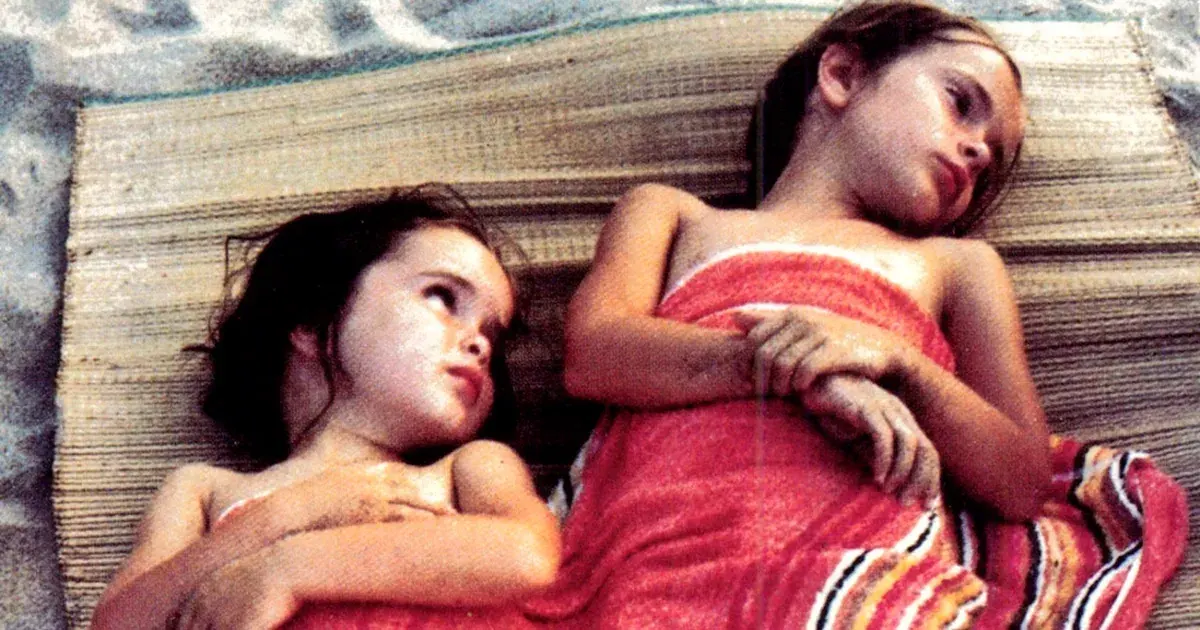
Reading The Character of Rain—what a terrible title compared to the poetic original title, Métaphysique des tubes—is like peering into the mystery of the origin of being. Before life, there was a tube: a perfect organism indifferent to its surroundings; an imperturbable being that neither felt hunger nor thirst nor desire. From this premise, Nothomb develops an autofiction narrative that explores the moment when unconsciousness turns into consciousness and passivity turns into activity.
The protagonist is a gifted child who, shortly after birth, decides to keep her extensive command of language and deep inner world to herself due to a superiority complex. She proclaims herself God. Considering it unworthy of her time and energy, she decides not to explain her intelligence to her parents. Instead, she chooses to be a cylindrical vegetable. Initially, this conceit demonstrates the limitations of language in articulating ineffable sensations intrinsic to our being. This changes when the protagonist—half Japanese and half Belgian—discovers white chocolate thanks to her grandmother. This sets off the unlocking of her consciousness, shifting her attitude toward life as she chooses to babble disconnected words to hint that she is not the inanimate creature her parents thought.
The Japan of her childhood appears as a mythical landscape, halfway between memory and fable. Her parents, grandmothers, and maids are figures that orbit her like satellites, unsure whether they revolve around a person or an enigma. In that universe, the only clear thing is the emergence of language. Saying “I” is true birth.
With her distinctive creative, egocentric prose, capable of elevating the ordinary through language, Nothomb draws the reader in through the depth of the little girl’s reflections. We see the world through the eyes of a cultivated adult and the innocence and body of a child—the inverse thesis of Poor Things (Yorgos Lanthimos, 2024)—which leads to situations not usually found in a character of this kind, such as suicidal thoughts .
In her philosophical exercise, Nothomb addresses many topics, such as the absurdity of abstaining from hedonistic pleasures, discovery, life and death, and living in a decaying household. She also explores the concept of national identity, a prevalent theme in her work due to her double nationality. She illustrates this concept through symbols, such as her father’s integration into Japanese culture through Nō theater, and the maids, who embody the mindset of Japanese society before and after World War II. The younger maid treats the family with respect and submission, while the older maid treats them with disdain and rebelliousness because she blames the West for Japan’s decline.
You can devour the story in an afternoon, but its impact lingers because it’s not every day that someone reminds us that we were once nothing; that existence was once pure passivity; and that it was only the irruption of language that wrenched us from the void. It’s a book light in pages but heavy in resonance.
A philosophical tale, a fictional autobiography, and a concise meditation on language and identity. All of that fits into The Character of Rain. Upon turning the last page, one is left with the feeling of having witnessed two births: that of a girl who glimpses what it is to belong nowhere, and that of a writer who already sensed that every life begins with a paradox.
P.S. I can’t look at koi carp the same way anymore.