
Memories of Murder (Bong Joon-ho, 2003) Review
One of us is the killer.
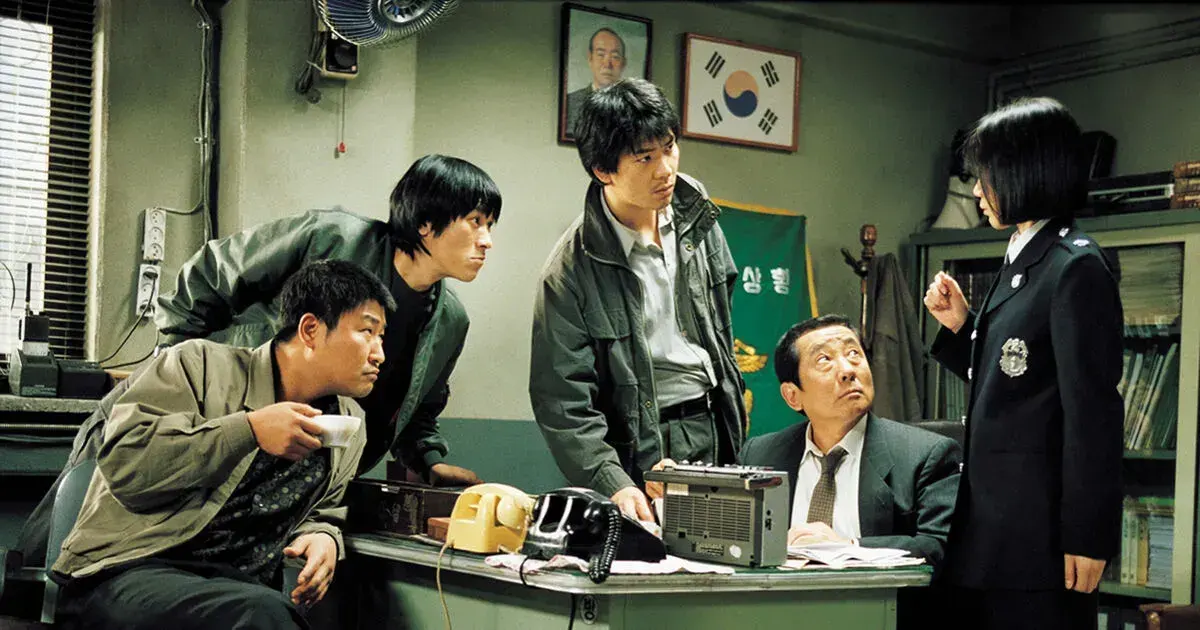
Crime thrillers usually promise certainties: a culprit, an investigation, and a resolution. However, what happens when the genre refuses to comply with these conventions and, instead of answers, only offers doubts? Memories of Murder opens this crack within the context of South Korea in the 1980s, a time when the country was mired in military dictatorship and a chaotic state apparatus.
This turbulent terrain serves as the backdrop for Bong Joon-ho’s cinematic exploration, drawing inspiration from the Hwaseong serial murders.1 This historical basis should imbue the work with an almost documentary-like weight. Despite this, the Korean filmmaker opts for combining dark moments with ridiculously goofy ones, which border on parody at times and considerably dilute the expected impact on viewers. One could argue that this reflects the absurdity of life, even amidst tragedy. Unfortunately, the tragedy doesn’t feel that tragic. The detectives in charge of the case are incompetent and prefer to throw flying kicks rather than conduct proper interrogations that could reveal the killer’s whereabouts. All of this takes place within a dysfunctional, disorganized system in which the characters complain about their dependence on foreign agencies and their lack of resources to handle cases of this magnitude.
The picture opens with an exquisite long take of a rice field, the site where one of the crimes took place. This introduction immediately reflects the disorder and chaos of the police system that the characters denounce. As foreshadowed by this opening scene, the subsequent investigation process is clumsy and rife with hasty judgments. In this sense, the film plays with us, the viewers. It tempts us us to judge, to look at the faces of the suspects and decide, with no other conclusive evidence than their disturbing appearance and the sinister energy they convey, who is guilty. It places us in the same position as the detectives, who are trapped in a vicious cycle of prejudice, helplessness, and despair.
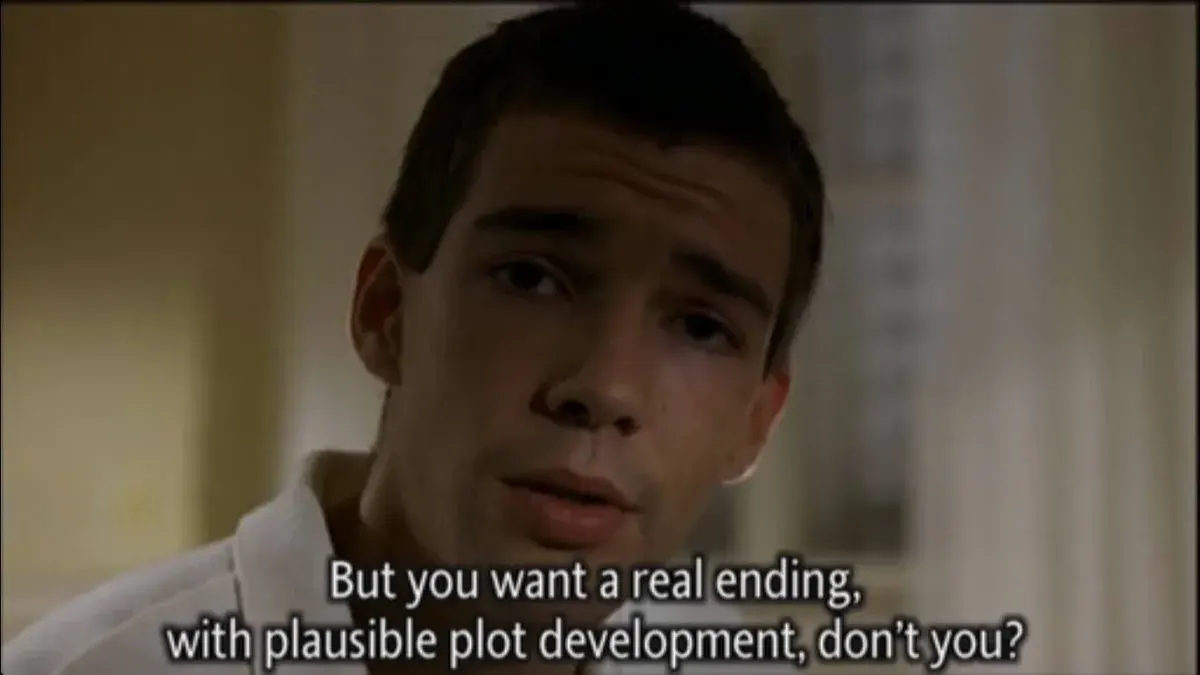
The suspects endure brutal police abuse, closely linked to the authoritarian system in which they find themselves. Their insistence on proclaiming themselves as the perpetrators of crimes they did not commit is a dramatic device that eventually becomes repetitive and arbitrary. The reason why they all desire attention is never explored. In contrast, the archetypes that each one represents are interesting as the film covers everything from depraved to ordinary profiles. This scale reflects our tendency to judge based on appearances without considering that even the most mundane people may harbor a dark side—a notion that Todd Solondz deeply explores in Happiness (1998).
The atmosphere is shrouded in a neo-noir setting, thanks to the muted chromatism and earthy tones, which convey a sense of hopelessness. Likewise, the use of audiovisual language is noteworthy, best exemplified in the transition from a scene of a corpse on a forensic’s table to a close-up of grilled meat. Even in comical scenes, the visual tone remains impassive. However, this solidity contrasts with a deceitful narrative progression, as the investigation’s advancement does not stem from the agents’ merits but from external help—curiously, almost always female. Similarly, it is ridiculous that so late in the plot, it is suggested that Baek Kwang-ho (Park No-shik) was a witness to one of the murders rather than the murderer, which is flagrantly obvious. Incompetence does not justify this fact, as Seo Tae-yoon (Kim Sang-kyung) discovers the existence of a third victim and her location simply by reviewing the case files.
The crimes follow a pattern: a rainy night, a specific song playing on the radio, and a woman dressed in red walking alone down the street. However, its consistency is broken in the last murder because it is not raining, and the victim is not wearing red. No one seems to notice this detail, which is glossed over by the rain that begins to fall after the last murder. I don’t know whether to interpret this as an inconsistency in the script or as a sign that, no matter how hard they try, the police cannot prevent the proliferation of this type of events in the system. Either way, it is unconvincing in light of the preceding events.
And yes, I am aware that it is possible that a case like this may never be conclusively solved, the identity of the murderer. In fact, I appreciate works that take this alternative approach. Nonetheless, my main issue with this films dwells on the way the story is developed and how implausible the agents in charge of the case are. While I understand the frustration of being trapped in a maze with no way out, where the clues only lead to more confusion and chaos, it is not credible that the detectives would become so exaggeratedly angry over anything and act out so dramatically. Moreover, I find it far-fetched that Park Doo-man (Song Kang-ho) would allow the final scene in the train tunnel to unfold the way it did, especially after witnessing Baek Kwang-ho being run over, in order to add more artificial tension to the scene. It is also inconsistent with the intelligent and rational profile constructed for Seo Tae-yoon because he starts shooting at the last defendant in a completely irrational and unmotivated manner. No matter how frustrated one may be, it is unbelievable to try to kill an innocent person this way.
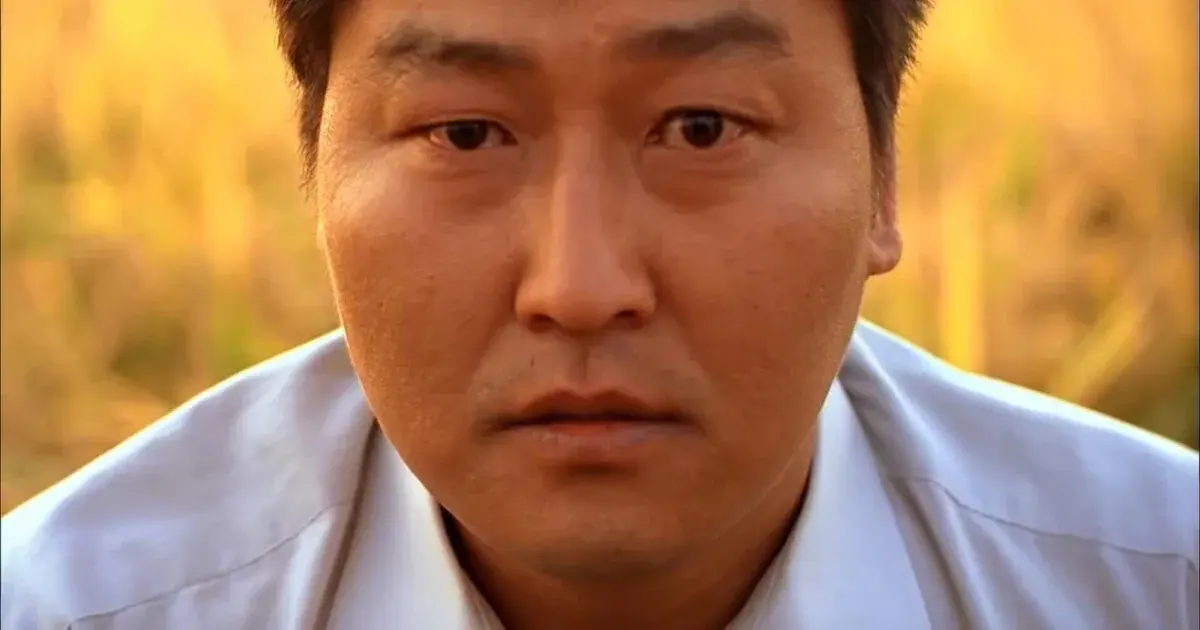
The film ends with an epilogue set years after the crimes. Its final scene contains a powerful message, but it is weakened by the preceding narrative poverty. The girl’s testimony that the killer looked ordinary, followed by the final shot of Park Doo-man looking directly at the camera, breaks the fourth wall, which suggests that the killer is off-screen and could be any one of us. Sadly, such a compelling conclusion is overshadowed by what precedes it, especially since the actual killer was identified in 2020—17 years after the release of this movie.2
Perhaps Bong Joon-ho’s thesis is that, in a corrupt system, there are no answers, only frustration. In that sense, Memories of Murder is more about a country and its structural wounds than it is about a murderer. However, due to its plot inconsistencies and forced slapstick comedy, the execution is uneven: powerful in its atmosphere but weak in its plot.
Footnotes
Footnotes
-
Min-sik, Y. (2023, July 5). Hwaseong murders: Korea’s most infamous cold case solved after 33 years. The Korea Herald. https://www.koreaherald.com/article/3162492 ↩
-
Wikipedia contributors. (2025, June 10). Lee Choon-jae. Wikipedia. https://en.wikipedia.org/wiki/Lee_Choon-jae#Identification_and_confession ↩