
Laurie Bird (Natural Snow Buildings, 2008) Review
An ode for the alive; a requiem for the dead.
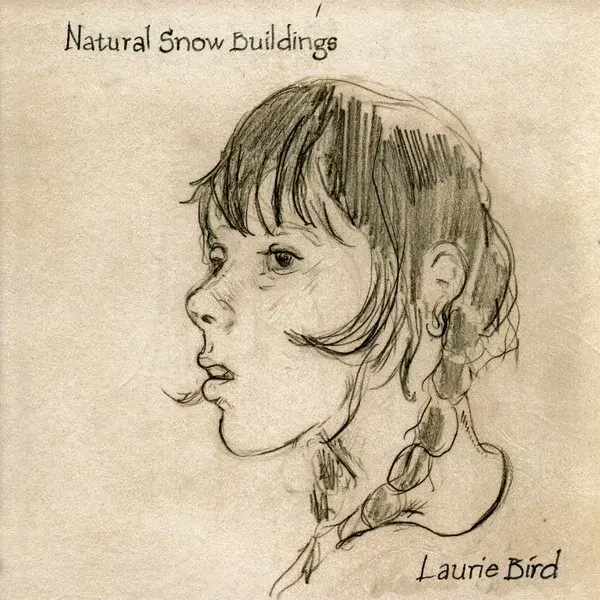
There was an unlabeled cassette found in a cupboard drawer, wrapped in a strip of torn curtain. No one could say how it got there, since the drawer belonged to a house where the owner had died three winters ago. The curtain, it turned out, matched none of the windows.
Someone played it, eventually. Not out of curiosity, really. It was more like a kind of boredom too deep to name. The tape hissed like a storm rolling in over a calm lake. Then, a tone began. It wasn’t exactly a note, but rather something reminiscent to a breath, or a distant memory humming through a dense Scandinavian forest. There were distant crackles, almost voices, almost strings, as if they were on a frequency inaudible to the human ear. The sound moved forward like a candle guttering in its own heat. After a while, it stopped. Then it didn’t.
The music didn’t demand anything. It hovered. It layered itself like dust. You could leave the room while it played and come back an hour later feeling sure that nothing changed—and also that everything had. Its melodies weren’t carried by instruments so much as by shadows of instruments. Drones drifted in and out as if someone were playing from inside a well. Occasionally, beneath the psychedelic sonic wall, you could hear what might have been singing encoded as ritualistic humming, if you listened closely enough.
It was impossible to tell how long the tape was. Some said forty minutes. Others left it running overnight and claimed it was still going when they woke up, though quieter and more threadbare. Some swore there was a different song on each listen, while others insisted it was always the same, just differently remembered. However, their experiences converged at one point: they all thought they were dead and ascending to what they called heaven.
The sound didn’t make you happy or sad. Rather, it reminded you of what those feelings had once felt like before they had names. It made you feel softly, and without drama, that you had already gone missing somewhere in your life, and the music was a way of folding that absence into something tender.
The tape encapsulated the wisdom of billions of years of Earth’s history. Despite being able to feel it, listeners couldn’t comprehend the magnitude of such sounds, but they were aware of the remote chance of coexisting with such a recording in the same space-time. Due to its inanimate nature, the tape had no choice but to wait for people to listen to it.
Those who listened to it said they hadn’t felt so loved since being cradled in their mothers’ arms, long before they could utter a word. One of the privileged few compared its effects to the healing power of Wayne’s hugs in The Leftovers. For those unfamiliar with the show, the reference slipped past them. Nevertheless, they instinctively imagined it as something out of a mystical tale. This preconceived notion made so much sense to them that they felt no need to ask about what kind of power the character might possess.
No one copied the tape. No one asked to borrow it. They just played it once in a while, and let it haunt the corners of the room. Over time, the cassette unspooled itself inside the deck. No one could fix it, nor did anyone throw it out. Everyone felt this tragedy as if something deep inside them had died, including the machine that played the tape. Sometimes, it would click on by itself, whirring quietly as if crying for its loss. Though the room stayed empty, it always felt like something was still being played, as if the presence of someone long gone—probably the deceased owner of the tape or the person to whom it was dedicated, if there was one—was still there.
Some music vanishes after playing. Yet that tape seemed to erase the room and any notion of consciousness. Even the most devout atheists were instilled with a profound conviction of the existence of a higher power that transcended our understanding. At that point, no one could tell if they were still alive—or if it even mattered.